Chef Deepa Shridhar reimagaines south indian cuisine in Austin with Thali Omakase and more.
By Nirvika Dhanasri
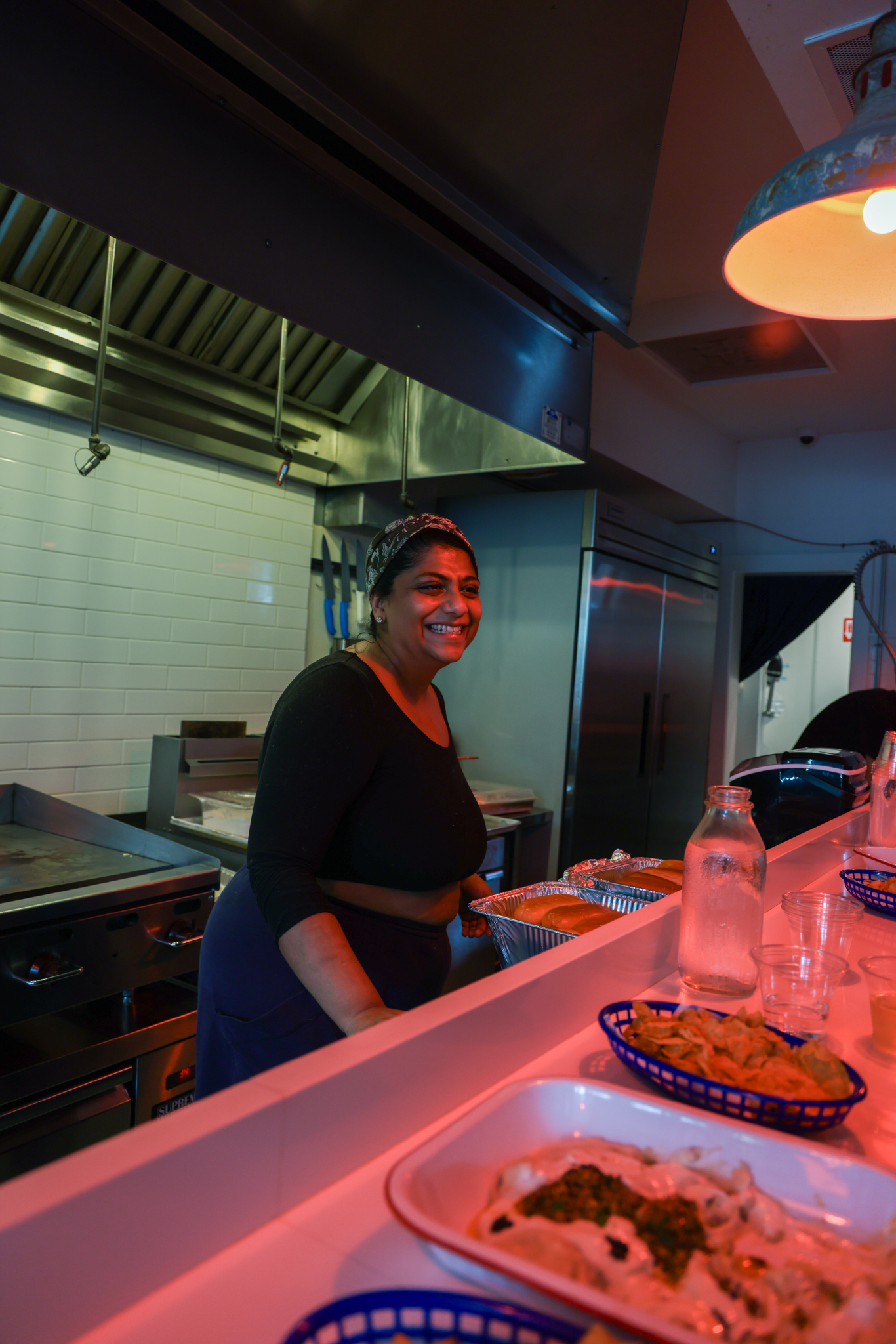
Chef Deepa Shridhar introduces the night’s Thali Omakase menu at Garbo’s Lobster. 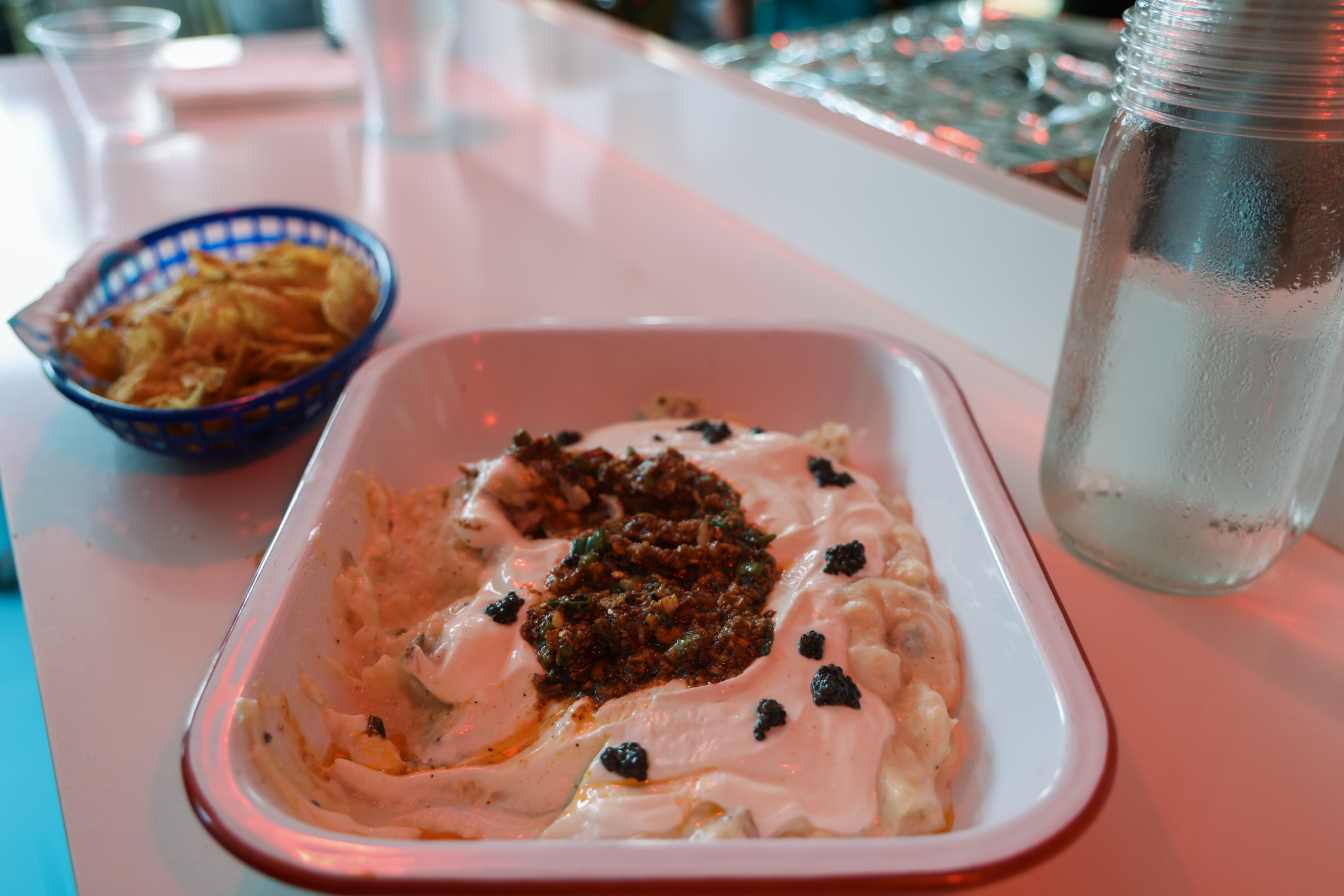
Potato and lime crema dip topped with spicy Salsa Macha and served with Rasam Podi potato chips. 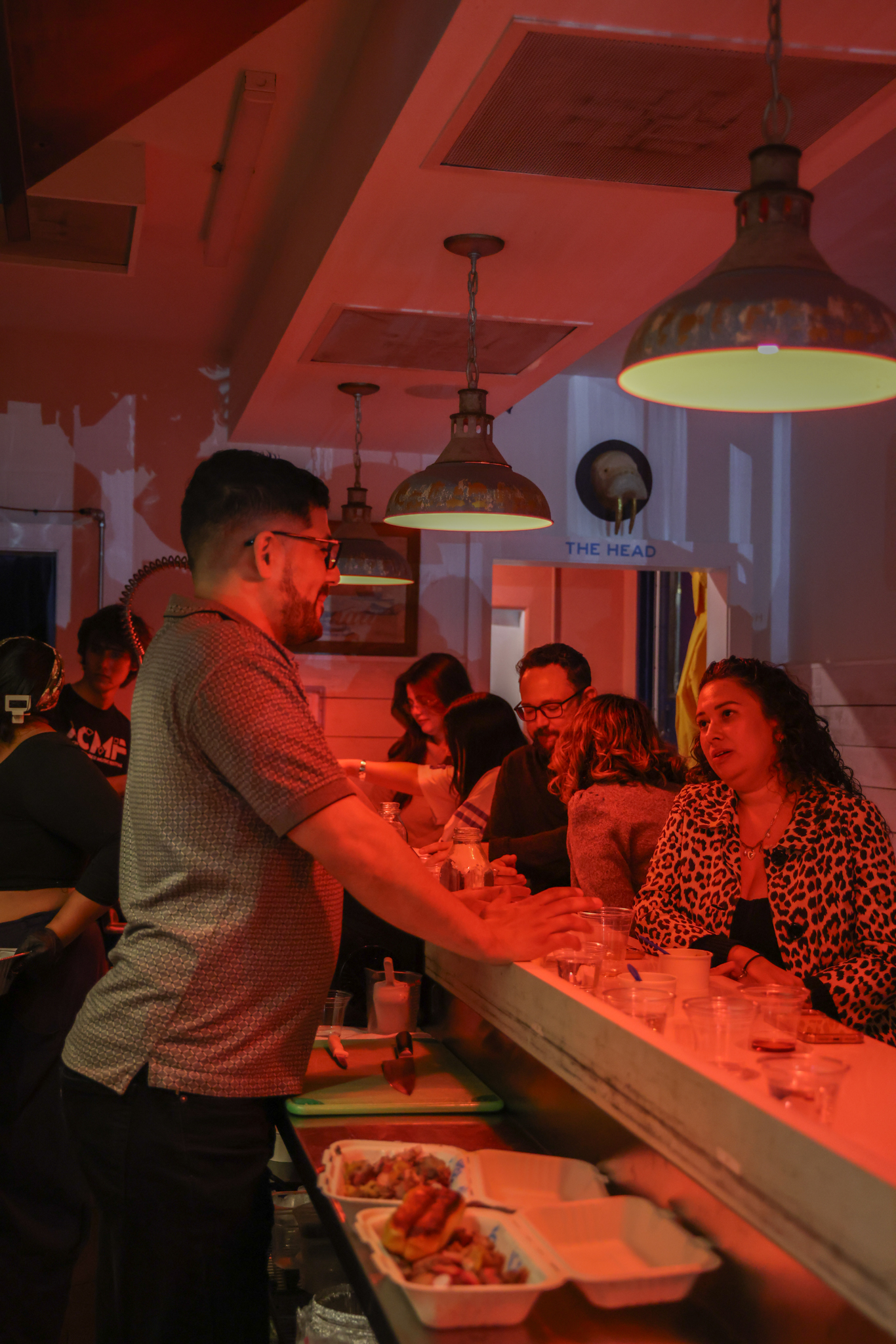
Alex Palomo and a supper club attendee having a chat. 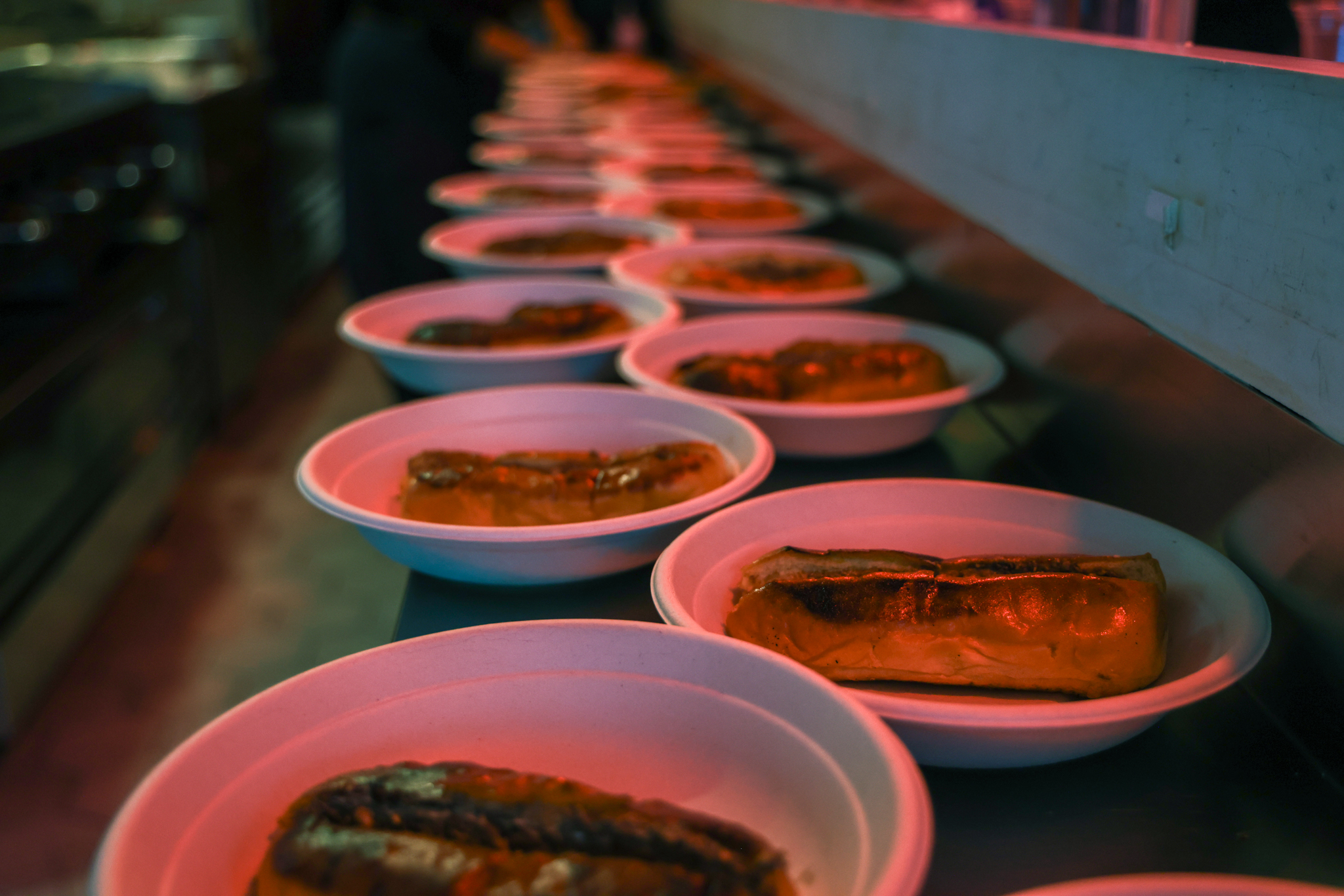
Steak and Lobster roll with steak aged in dosa batter dipped in a consume and served on a fluffy bun.
Chef Deepa Shridhar doesn’t want to own a restaurant. What she wants, and has spent the greater part of her life building, is something more obscure and arguably more difficult to pull off: dining experiences so intimate and so imbued with cultural memory and flavor, that it lingers on hearts, minds and taste buds long after the final bite of food or last sip of wine.
Shridhar spent years cultivating this vision. In 2014, the 27-year-old chef started her first supper club, named Anjore and later opened a farmers market stand. In 2017, she introduced her eccentric flavors to Austin with her food truck Puli Ra. Since then, she was a runner-up on Food Network’s Chopped, launched a podcast and Substack called Sicc Palette and assembled a following hungry for the kind of cooking only she can offer.
It all began inside a pot, where a thin, peppery, tomato and tamarind broth, known as rasam, steamed quietly in a Tamilian immigrant’s kitchen, years away from the moment Shridhar would pair it with pinot noir and Butterkäse.
“Rasam was huge,” Shridhar said of her childhood. “I don’t remember a day without rasam.”
At around age 12 or 13, a young Shridhar set about the risky tasks of refusing last night’s dinner and tempering fats like ghee into liquids like rasam, opting to cook something ultimately weirder instead.
“It actually stems from the fact that I hate leftovers, and when you’re an immigrant kid, you have to finish your leftovers,” she said. “I decided that I would make things out of those leftovers, something new, something different.”
These formative years, between India and Texas, spent soaking up the knowledge of the Tamilian home kitchen and immersing herself in the barbecue pits, Tex-Mex restaurants and Vietnamese noodle shops of Garland taught Shridhar that she does not belong to simply one or two cultures. Rather, she believes she exists in a “third-culture.” One which combined the nuances of South Indian cuisine with the slow-cooked and saturated flavors of the Deep South.
While feeding her housemates at Austin College, Shridhar realized her knack for cooking and began to wonder “What if I became a Chef?” The idea didn’t sound attractive to her parents, but Shridhar flirted with it enough to commit, and once she committed, she fell head over heels. They say if you love something you should let it go, but Shridhar holds on, and her loyalty to cooking birthed a career, carried her through trials and, most importantly, brought her joy.
Upon graduating college, Shridhar returned to Dallas where she staged at Lucia, a difficult but informative experience for her as the only women in a hostile and fast-paced kitchen. Then came Austin, where she worked at Dai Due under chef, butcher and author Jesse Griffiths, waking up an hour before her dishwashing shift just to touch food. After that, plating at Lenoir, where she absorbed the vocabulary and technique of fine dining and plotted her next move.
“I felt that I needed to go off on my own if I truly wanted to represent Indian food with authentic flavors,” Shridhar said.
Through it all, she built the her South Indian Texan or “third-culture cuisine,” a term that is the principal quality of her most recent supper club endeavor, Thali Omakase. The 10-person dinner, made in partnership with Garbo’s Lobster, combines the restaurant’s fresh seafood with the flavors of south india she’s most compelled by.
Along with the Garbo’s partnership, the menu is paired with wine from Williams Chris Vineyard, a Fredericksburg winery named among the world’s 50 best. Collaboration characterizes Shridhar’s dining experiences and she says she is lucky to have “badass” people around her with palates she can draw from. Like Samantha and Hannah Garbo of Garbo’s Lobster and her manager Alex Palomo, whom she calls “one of the foremost authorities on cheese in Austin.” Still, she emphasizes confidence in her immigrant instincts.
“Most important, is trusting myself that these flavors do work, because our palette is a sophisticated palette,” Shridhar said about South Asians.
The Thali Omakase format emerged, in part, out of a near miss and some soul searching. In 2024, Shridhar came within two days of appearing on NBC’s Top Chef before getting passed for an alternate. The Top Chef executives viewed her, she recalls, as a live wire chef from Texas without enough fine dining experience. Despite the sting, she persisted and created an event that took the familial aspects of the Tamilian Thali and coursed it out with the deliberateness of a Japanese tasting menu.
“I realized that even though I consider myself a fine dining chef, I had not given myself a platform to really showcase the kind of food that I believe South Indian food can be,” she said.
The supper club’s intimate and controlled environment allows Shridhar to showcase her personality and create an atmosphere she loves. Beyond the personalized menu, each night features its own specific drinks and playlists – imagine rasam vodka shots or coconut fat-washed gin and a night of Beyoncé’s greatest hits. To her, the vibe is as important as the menu and she wants the event to feel like a party she’d would attend.
Shridhar’s creative life as a writer and podcaster is fueled by a desire to romanticize South Indian cooking and share deeply personal stories that don’t shy away from the trauma of the kitchen. She isn’t afraid to confront her profession and her food, like her recent newsletter about black pepper and its painful history of colonization.
Shridhar feels the future of fine dining is no longer in a brick-and-mortar but is in experience, culture and content. Her commitment to creativity and the renaissance she believes South Indian food is having in the fine dining sphere positions her inside that future.
“I always knew that whenever I was going to cook on my own, it was going to be weirder and different,” Shridhar said.


Leave a Reply